Cellular devices want specific hardware and software additives to connect with mobile networks. These components permit the device to perceive and fix to networks owned through specific vendors, permit the network to authenticate the device to make certain it has get entry to eSIM compare and companion the tool and its community utilization with a selected account.As you explore cell additives, at times you can pay attention numerous exclusive terms for additives that offer the identical core characteristic, along with a SIM, eSIM, and iSIM. The distinction among those components may want to have a full-size impact in your device’s future functionality, protection, and scalability, so it’s important to apprehend the differences among them.In this text, we’ll look at every of these components and describe how their variations impact your device.
What is a SIM?
A SIM is a Subscriber Identity Module. It’s an included circuit component that has its personal running and filesystem. The SIM securely stores records needed to authenticate and get entry to a cell community, which include non-public keys, safety algorithms, and identifiers along with the International Mobile Subscriber Identity (IMSI).
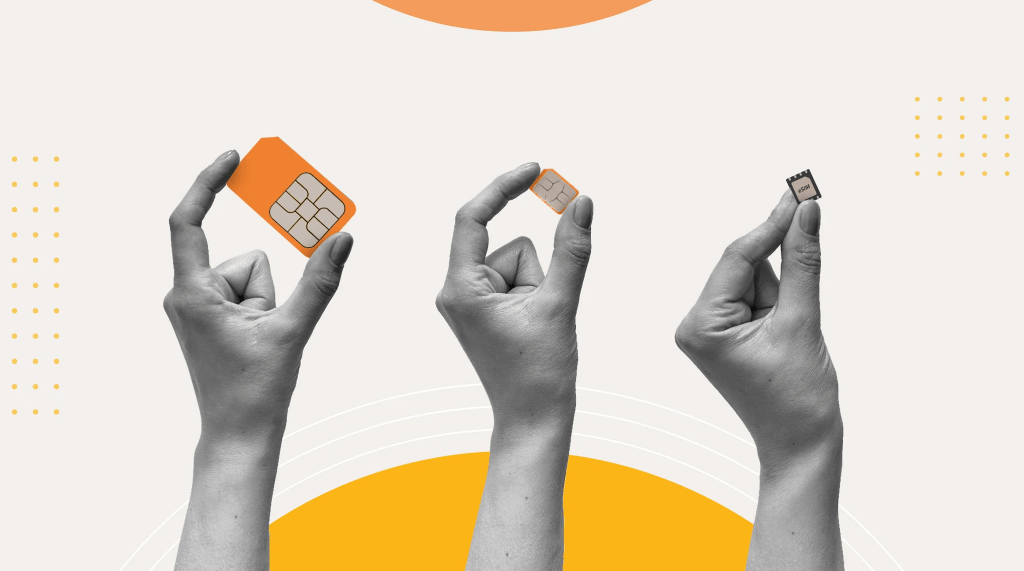
While a SIM includes a software program aspect whilst human beings say “SIM,” they’re generally referring to the bodily hardware that shops it: a SIM card. Standard SIM playing cards are available in traditional shape factors mini(2FF), micro(2FF), and nano (4FF) – however there are SIM chips within the embedded form factor (MFF2) – which can be often ambiguously known as eSIM.
SIM cards require a slot in the device and are detachable, which permits a person to reuse their SIM card in another tool or installation a brand new card to get admission to distinct networks. The SIM within the embedded shape factor are soldered onto the device or module – and aren’t detachable. When evaluating conventional SIM shape elements and embedded SIMs – the embedded SIM prevents theft of the SIM, in addition to provides better physical traits in phrases of shock and corrosion resistance. On the alternative side traditional SIM form elements may be modified in case a SIM switch is needed.
Disadvantages of a SIM
Traditional SIMs – no matter if they are embedded or have standard plastic card form issue – have numerous dangers. In cell IoT, certainly one of the biggest risks of traditional SIMs is that they come pre-programmed with a unmarried identity, with a set functionality to be had at the SIM card at the time of production. While in the consumer case, human beings have get right of entry to to the SIM card and might trade it inside the case of want, for cell IoT the gadgets are usually inside the discipline at a patron site – without an clean possibility to swap SIM cards. So for mobile IoT adjustments which are going on after the SIM production can impact the provider availability, including the shutdown of radio technologies like 2G, and 3G or converting roaming partnerships and regulations.
What is an eSIM?
An eSIM is a SIM card that can be remotely updated over the Air. With purchaser devices which include smartphones and capsules, the eSIM is often known as only a software profile that is downloaded via a QR code. For IoT gadgets the eSIM is still a physical card or embeddable module – so the eSIM is available in all the form factors as popular SIMs. From a technical angle, the eSIM that is used in typical IoT gadgets is known as M2M eUICC as standardized via the GSMA.
Advantages of an eSIM
eSIMs have numerous key blessings over conventional SIM cards. First and main, they can be provisioned with a new profile OTA. Traditional SIM cards have always been stuck with the prevailing capability that become to be had once they have been produced. With the eSIM OTA capability, the eSIM can get hold of new profiles with exceptional network coverage, enable within the destiny new radio technologies like 5G and mobile over satellite tv for pc (NTN), or additional clever functionality may be updated on the eSIM which includes applets or safety mechanisms. This massively improves your tool’s ability to alter to a changing surroundings and guarantees that your SIM is attached for so long as your device’s lifetime.
Disadvantages of an eSIM
From a technical perspective, there is no drawback of an eSIM compared to a fashionable SIM – the whole lot a SIM can do – the eSIM can do as well and better. As one of the latest, maximum superior SIM technology, eSIMs are extra highly-priced than traditional SIM playing cards and no longer all gadgets can make use of the over-the-air update capability – e.G. Devices that don’t allow to acquire SMS.
What is an iSIM?
An iSIM is an Integrated Subscriber Identity Module. It’s basically a greater superior eSIM. It provides the equal functionality, however you don’t need to solder it onto the device’s circuit board. Instead, an iSIM has a committed area on the System of Chip (SoC), wherein it’s protected by a Tamper Resistant Element (TRE).Integrated SIMs continue the culture of creating mobile additives smaller and greater efficient, and at the wi-fi module it’s far only a fraction of the size of an MFF2 (eSIM), which turned into already drastically smaller than a conventional SIM card.
Advantages of an iSIM
An iSIM has the equal benefits as an eSIM: it’s more long lasting and tamper-evidence, it is able to exchange providers OTA (way to its eUICC capability), and because it’s even smaller than an eSIM and constructed proper into the SoC, it has simply no impact on your device’s design.Since the iSIM is built into the chipset, you don’t surely even have to install it. No soldering vital. The operator profile could be provisioned on the module throughout the chipset manufacturing. At scale, this will help you manufacture and deploy gadgets faster.
Disadvantages of an iSIM
Currently, iSIMs aren’t in extensive use. This is the most modern SIM technology in the marketplace, and so the chipsets and modules which might be iSIM capable are confined.
Difference between SIM, eSIM, and iSIM The most apparent distinction among the SIM, eSIM, and iSIM is size. Smaller SIM codecs give you more flexibility in terms of designing your tool, and in some programs, building
 eSIM compare
Leave a comment